
Canada Prepares for War
While the information war rages on, Carney looks to ramp up military warfare

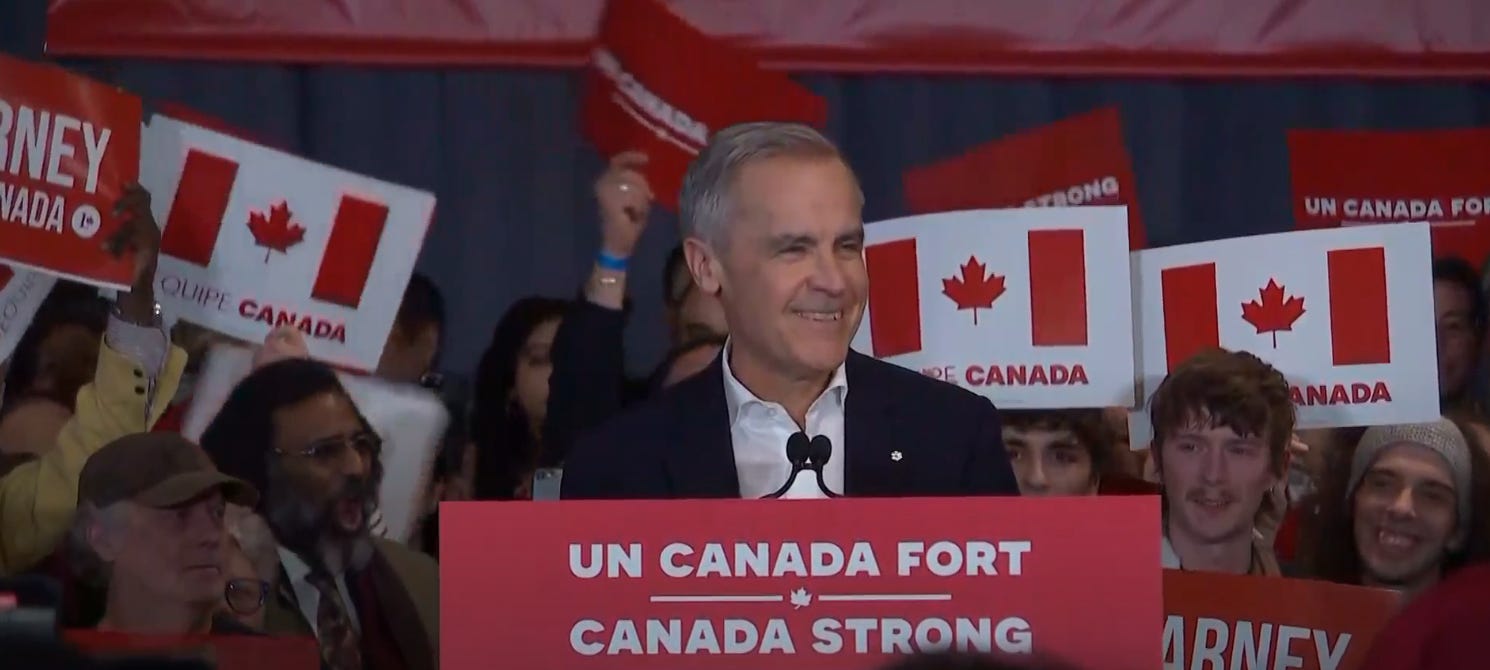
A little over a week after Mark Carney won the Liberal leadership race, he found himself not preoccupied with the concerns of ordinary Canadians, but rather with the shortcomings of our military.
On March 18, 2025, just four days after he was sworn in as Prime Minister, Carney delivered a notable speech in Iqaluit, Nunavut where he announced a number of measures that would ‘strengthen Canada’s Arctic security.’ It would be one of many speeches he would make that focused on Canada’s military prowess, or lack thereof.
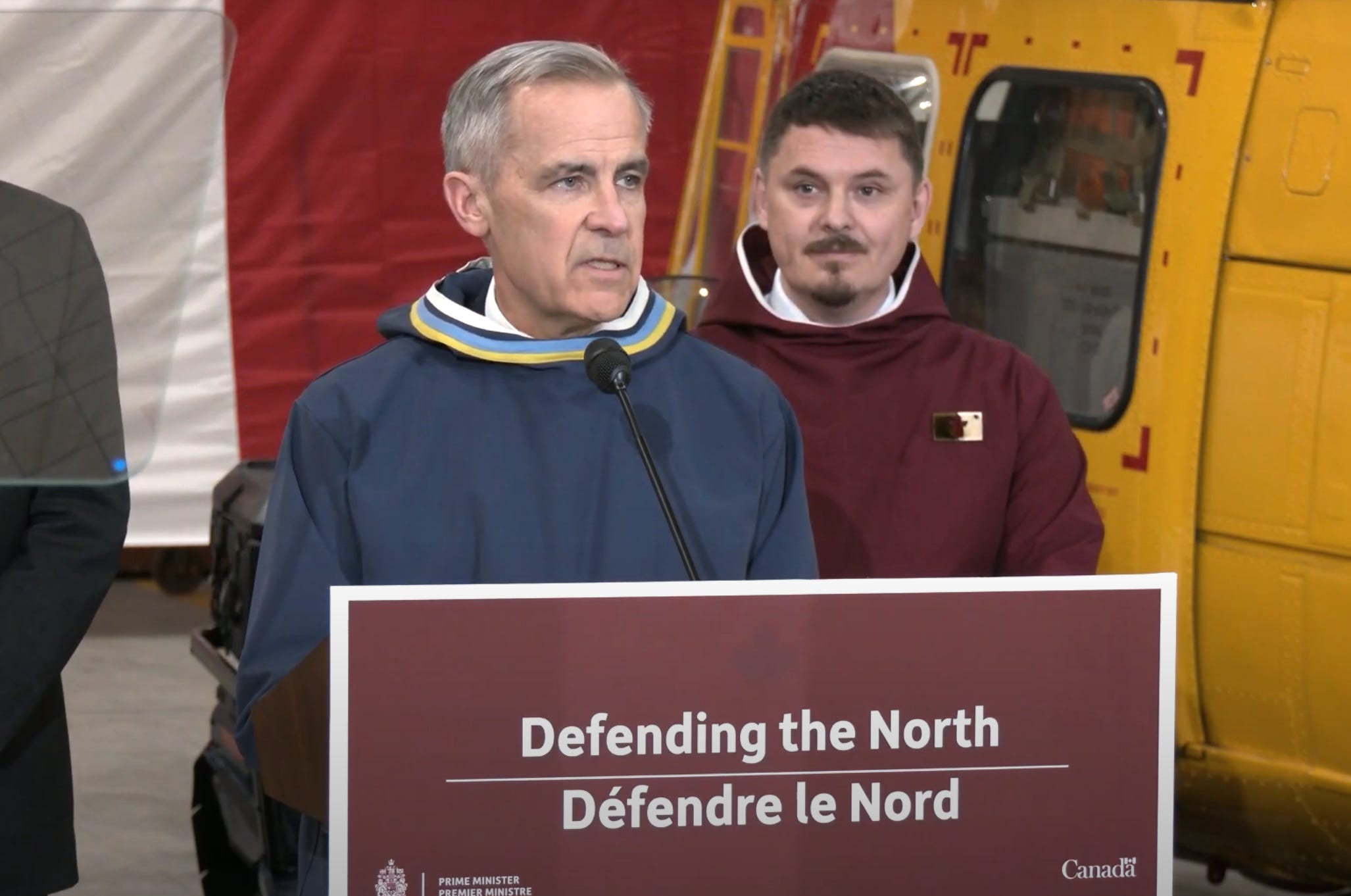
In his speech Carney emphasized, “We must invest in Canada’s North to defend our sovereignty. Arctic sovereignty is a strategic priority of our government.”
He brought up Canada’s new partnership with Australia to build a $6 billion long-range radar system, enabling “Canada to detect and respond to both air and maritime threats over our Arctic faster and from further away. It will fundamentally keep all Canadians safe.”
While this speech received little fanfare or media attention, it marked a significant turn in regards to Canada’s military approach, and to me, was a clear indication of big things to come.
On the campaign trail, Carney continued to reference the importance of protecting the Arctic. While his supporters were satisfied with his occasional surface level “Elbows Up” rhetoric, Carney was looking elsewhere.
Shortly after the federal election, along with other NATO countries, Carney pledged to commit 5% of Canada’s GDP to NATO by 2035, which would amount to some 150 billion dollars a year. This would later be restated in the federal budget. Even among his most ardent supporters, this move was deemed unexpected and a step in the wrong direction.
In June 2025, Brendan Cook, the Royal Canadian Air Force’s Director General, Air and Space Force Development, made some concerning remarks. Cook warned that we must anticipate “peak threats” between 2028 and 2030, and that these threats may propel the world into another international conflict. In other words, another world war is coming, and it’s coming soon.
Cook’s remarks aligned with the highly anticipated and ultimately underwhelming federal budget, which was widely deemed to be an austerity budget, but with a twist. While it notes that we should expect significant job cuts, it also proposes a number of new agencies and initiatives, primarily where it concerns defence spending.
The budget proposes doling out $81.8 billion over five years towards defence investment. It includes many snapshots of how the funds will be allocated, but ultimately it leaves much to the imagination. As one example, it notes that $17.9 billion would go towards expanding Canada’s military capabilities, including investments in armoured vehicles, counter-drone and long-range precision strike capabilities, domestic ammunition product, and other equipment that is not disclosed — though it’s not clear what deals have been made with which contractors, who is procuring this equipment, or how it will be used.
The budget also proposes hiring 1,000 additional RCMP personnel, 1,000 additional CBSA (Canada Border Services Agency) officers, developing a Defence Investment Agency (DIA) that would “overhaul Canada’s defence procurement” and creating a new federal agency called the “Financial Crimes Agency” that would allegedly combat financial crimes.
So while Carney is making job cuts, it’s not exactly reflected evenly across government agencies. While these new agencies have been briefly mentioned and some numbers have been thrown around, the budget is still short on specifics. Unlike previous federal budgets, this one didn’t offer an itemized breakdown of defence spending, so it’s not clear where specifically the money is actually going and how we’re expected to fund this exorbitant boost in funding.
In his budget speech, Finance Minister François-Philippe Champagne declared that the budget “represents the largest defence investment in decades,” which is apt. It should be noted that Champagne participated in the secretive Bilderberg Meetings for the past 2 years and Carney was a regular attendee for several years.
Champagne, like Carney, emphasized the importance of ‘sovereignty’ and protecting the Arctic. There are a number of currently active military operations in the Arctic, including Operation NANOOK, which is an annual military exercise that has been conducted in cooperation with the Danish, French, and the United States. For all of Carney’s talk of the ambiguous Trump threat, he sure didn’t mind the United States’s involvement in Canadian sovereignty exercises over the past couple years.
In addition to this operation, Carney has also announced year-round military presence in the Arctic. Additional Arctic projects have been proposed, though they’re primarily infrastructure investments, and details are yet to be disclosed.
Taken all together, this a curious step, especially considering we are not in an active wartime situation and our armed forces have been in steady decline since World War II.
In conjunction with the items outlined in the federal budget, the Canadian Armed Forces (CAF) is developing a ‘Defence Mobilization Plan’ which would see its membership grow from its existing 60,000 full-time members and 28,000 reservists, respectively, to some 400,000 members (100,000 members and 300,000 supplementary and other reserves combined). This is a clear sign of things to come. It’s an ambitious goal with seemingly no major event to trigger its actual necessity.
The powers-that-be point always point to some nebulous, distant bogeyman-like threat like Russia, China, Trump — the usual suspects. But CSIS Director Dan Rogers is looking in another direction. In his annual speech to the public, Rogers listed out a number of threats on the horizon, including polarization, erosion of social cohesion, and unpredictable global events. But one of his main concerns, he shares, is violent extremism and the radicalization of youth.
Turns out, there’s no shortage of actual or perceived threats that we may face, and the government wants to do something about it.
Unsurprisingly, Canadian media outlets seem to be largely unconcerned with these developments, though I suspect if these were Conservative-led proposals, we wouldn’t hear the end of it. The Canadian government is eager to forge on while Canadians are left wondering how exactly are we going to pay for this unprecedented military expansion.
Notably, in 2024, the world’s total military expenditure reached the highest peak ever since at least the end of the Cold War. And in a historic moment, NATO members declared they would equally invest 5% of GDP on defence by 2035 — this includes Canada, the UK, United States, Germany, and 27 other NATO countries. This doesn’t include the dozens of other countries who have also significantly increased their military spending. Interestingly, the U.S. recently pressured Australia to increase its military spending “as soon as possible.” Australia is already increasing its spending, announcing its goal to invest 2.3% of GDP by 2033, though apparently that is not sufficient enough for the United States.
Russia has also significantly increased its military spending — its 2025 defence budget looks to be the highest level since the Cold War, which is on track with other countries. China also continues to invest heavily in defence, though reports claim that its actual spending amounts to much more than its official budget.
While their motivations may differ, all of these countries are operating in lockstep. For many decades, globalization has flattened communications. Global cooperation now usurps national sovereignty. Nation states no longer operate in isolation. Their policies are the world’s policies. Sovereign citizens are global citizens. Local laws are international laws. Where one goes, the rest follows. This also applies, dangerously, to modern warfare.
I suspect something big is on the horizon, and it is not the threats that we are told we should be afraid of, it is the unspoken threats that loom over us.
Perhaps the powers-that-be are preemptively preparing to combat the biggest threat of all: The growing unrest among ordinary people. This threat is real and it is being felt all around the world. With growing economic insecurity, instability, mass job losses, fractured realities, AI domination, digital distractions, and an information war that rages on, it’s clear that we are living in deeply disorienting times. People are angry, disenfranchised, and worst of all, hopeless. And when you have a citizenry that has lost hope, then the real threat becomes your own people. It remains to be seen whether this war will be waged on its own citizens, on other nation states, or a combination of both.
Spot on. Our overlords know where the real threat lies. They are afraid of their own people and, if unable to distract us with external bogeymen and fabricated wars, think that they can always pivot and turn our own military on us. It remains to educate our young men to recognise this nefariousness - and simply to refuse. Refuse to engage in the military industrial complex, and instead to start doing what men do so well. Protect and build. Let the bogeymen come to us, if they ever will, but in the meantime, concentrate on building up our homes, families and nations. And when the time comes, send the parasitic elites packing - teach them what real fear is all about. We have had enough of their fear tactics. Let them taste it themselves.
The only wild card, in these times, is the technocratic overclass, and what they have in mind to deploy on us. Already are, in fact. With most people wilfully and ignorantly complying. We will need to get to the point - and fast - of dismantling and destroying the surveillance architecture that is forming around us. Location tracking, cameras, interconnectedness, smart watches, smart technology, drones, Musk's orbiting satellites and others. These are all seemingly "useful" technologies - until they're not. They are undoubtedly an existential threat in the wrong hands. Therein lies our captivity and imprisonment. We would do well to recognise that, and act - soon.
New troops equipped with DEWs in order to put down any protest against CARNEYvorous Rex coercitive bills and Digital ID?
To me, this increased budget will either be used to put down any internal rebellion or, as all the money to Ukraine is, laundered in LIEberals pockets.